Hole 2 · Since 1850
Golf shoes: from metal spikes to spikeless
Mid-19th century to today
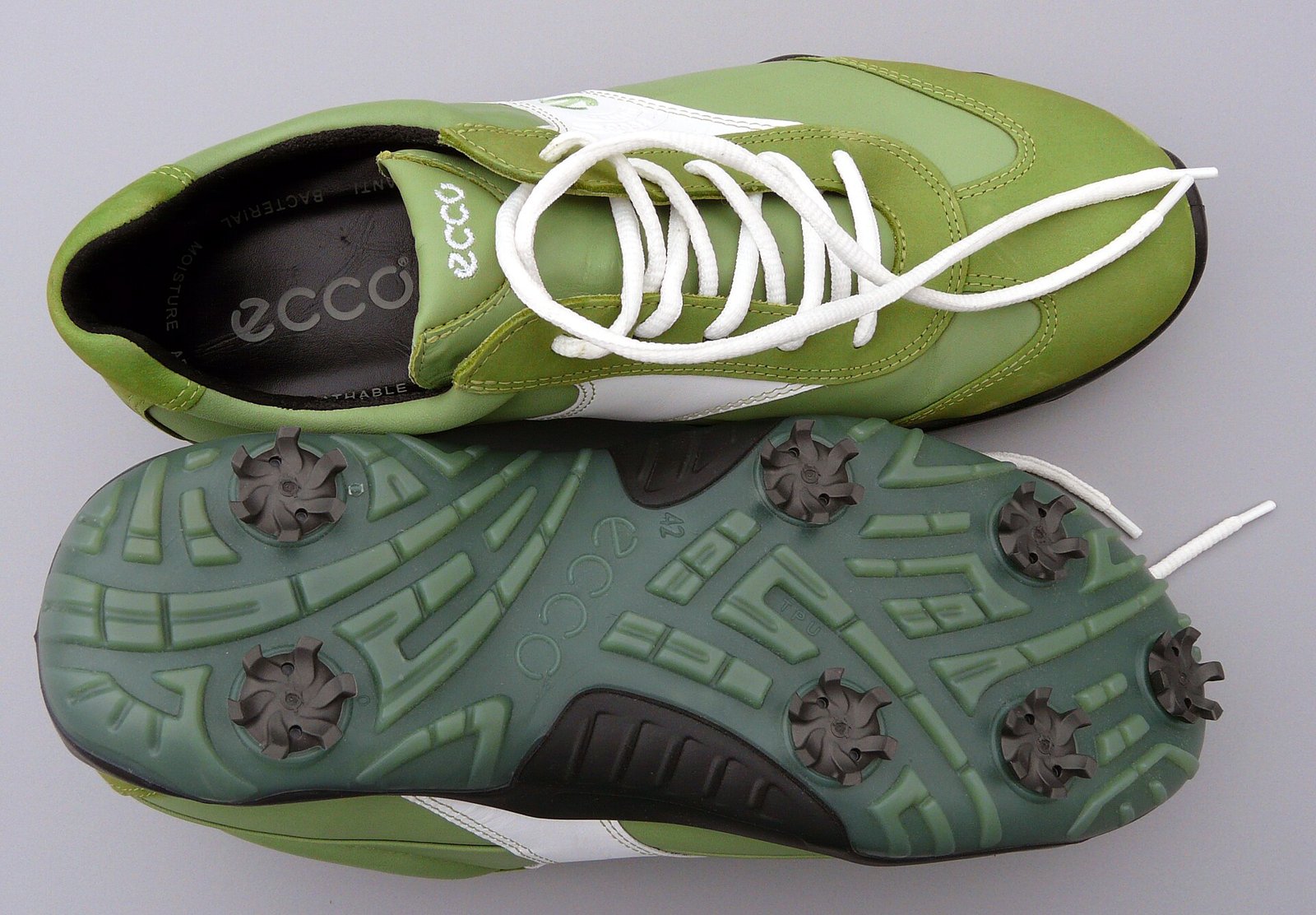
Golf shoes began as leather boots studded with hammered nails. Metal spikes gave way to plastic soft spikes, then to spikeless shoes, and most courses now ban metal outright.
.jpg)
What it solved on the course
Grip. Spikes increase traction so a player keeps balance during the swing, on greens or in wet conditions. Metal spikes did that job well, but they tore up greens, walkways and carpets, which is why courses moved to plastic and spikeless designs.
History
In the mid-19th century, Scottish golfers hammered nails into their leather-soled boots to stop themselves slipping on wet turf. Before the end of the 1800s, permanent screw-in metal spikes had appeared, and the crunch of metal on a cart path became part of the sound of golf. The grip was real, but so was the cost: spikes tore up greens, wooden bridges, carpeted surfaces and walkways.
In 1993, several state golf associations backed a campaign to ban metal spikes during cold weather to limit damage to the grass. Faris McMullin, an inventor from Boise, Idaho, wondered whether a nonmetal spike could come close to the grip of metal without tearing, puncturing and compacting turf. Tour validation came slowly, with Billy Mayfair the earliest big-name player on the bleeding edge. Today about 85 percent of Tour pros play nonmetal spikes, and courses that don't ban metal spikes are rare, unless you're a tour pro.
Companies like Adidas, Puma and Ecco then introduced spikeless shoes. Fred Couples arrived at the 1st tee at the 2010 Masters in a pair of spikeless Ecco golf shoes.
Who wore it best
Tiger Woods
Still wears a hybrid metal spike from Champ called the Pro Stinger, one of the few players allowed metal at PGA Tour events and majors.[2]
Fred Couples
Arrived at the 1st tee at the 2010 Masters in spikeless Ecco golf shoes, putting the spikeless look in front of a huge audience.[1]
Billy Mayfair
The earliest big-name player on the bleeding edge of nonmetal spikes, giving soft spikes their first serious tour validation.[3]
How to wear it now
- Pick spiked shoes for wet or soft conditions and hilly courses, where the extra grip earns its keep.
- Go spikeless for dry summer rounds, driving-range sessions and the walk to and from the clubhouse, where a flatter sole is more comfortable.
- Fit beats sole choice: about seven in ten golfers wear the wrong size, so get measured late in the day when your feet are at their largest.
- Keep it simple on course: white or neutral leather with tailored trousers and a polo. Save darker spikeless trainers with tapered joggers for the range.
Where to buy
New
Vintage
Links open the shop's own site. Some may earn us a commission.
Sources
- Should you opt for spiked or spikeless golf shoes?, GOLF.com. Retrieved 2026-09-29.
- The reason Tiger Woods continues to wear metal spikes, GOLF.com. Retrieved 2026-09-29.
- Why golf spikes suddenly went all soft on us, GOLF.com. Retrieved 2026-09-29.
- Golf equipment, Wikipedia. Retrieved 2026-09-29.
Updated .