Hole 11 · 1920–1930
1920s golf fashion: plus fours, sweaters and shorter skirts
1920s
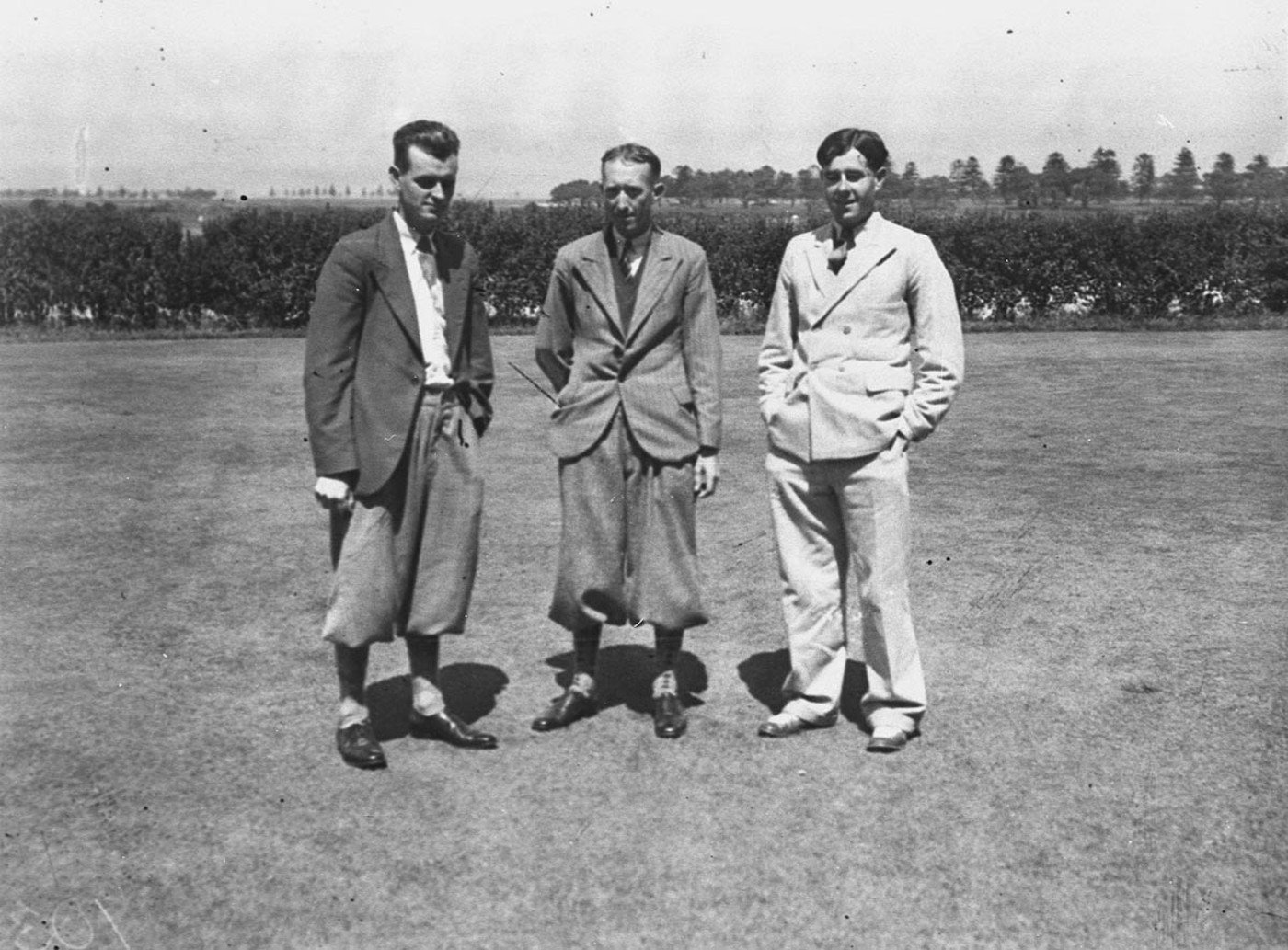
Golf in the 1920s had a recognizable look. Men wore plus fours with long socks, a tie and a flat cap. Women wore shorter skirts and cardigans.

What it solved on the course
Old golf clothes were tweed coats and ties, which is a lot of fabric to swing in. Plus fours gave the legs room to move. Long socks ran up to meet the breeches. A sweater added a lightweight layer. A tie and flat cap finished the look.
History
In the early days of the game, golfers often hit the links in tweed coats and ties, which is a heavy way to swing a club. Plus fours fixed that. They were breeches cut to fasten four inches below the knee, baggy enough to move in. Argyle socks ran up to meet them, and two-toned leather shoes with cleats finished the job. A soft shirt and a tie went on top, sometimes a bow tie.
Edward, the Prince of Wales, made the whole thing fashionable. He wore plus fours on the course and Fair Isle sweaters with them, and when he was photographed in a Fair Isle knit on the links, orders for the hand-knit sweaters followed. The sweater reached American Vogue in 1927. He liked flat caps and argyle socks too, and reporters followed him on his American tours.
Women's golf clothes loosened at the same time. Shorter skirts and more flexible fabrics became the norm, and lightweight cardigans were popular for layering over blouses. Bobby Jones played in plus fours and a starched collar. Walter Hagen helped set the tone in the 1920s and 30s, in crisp white shirts, snazzy sweaters and fancy leather shoes.
Full-length trousers took over after the Second World War, and plus fours went quiet.
Who wore it best
Edward, Prince of Wales
He wore plus fours, Fair Isle sweaters, flat caps and argyle socks on and off the course, and the world copied him. When he was photographed in a Fair Isle knit on the links, the island knitters were swamped with orders.[2, 5, 6]
Walter Hagen
Walter Hagen was one of the golfers who set the tone in the 1920s and 30s, with crisp white shirts, snazzy sweaters and fancy leather shoes.[1, 3]
Bobby Jones
Crisp white shirt, starched collar, bow tie, plus fours. His play and his style made the look stick.[2, 3, 4]
How to wear it now
- Start with plus fours in a gray or tan wool and keep everything else plain. One loud thing per outfit is plenty.
- Long socks should meet the breech with no gap. A ribbed wool in one color reads better today than a full argyle diamond.
- A Fair Isle sweater works with jeans and a flat cap on a cold morning. Pick two colors and let the pattern do the talking.
- If the breeches feel like too much, take the top half instead: a knit polo, a thin tie and tailored trousers in a light wool.
Where to buy
Vintage
Links open the shop's own site. Some may earn us a commission.
Sources
- Grey Journal, Grey Journal. Retrieved 2026-10-01.
- Caddie HQ, Caddie HQ. Retrieved 2026-10-01.
- Fore Magazine, Fore Magazine. Retrieved 2026-10-01.
- Pin High, Pin High. Retrieved 2026-10-01.
- Vintage Dancer - Prince of Wales, Vintage Dancer - Prince of Wales. Retrieved 2026-10-01.
- V&A Museum, V&A Museum. Retrieved 2026-10-01.
Updated .